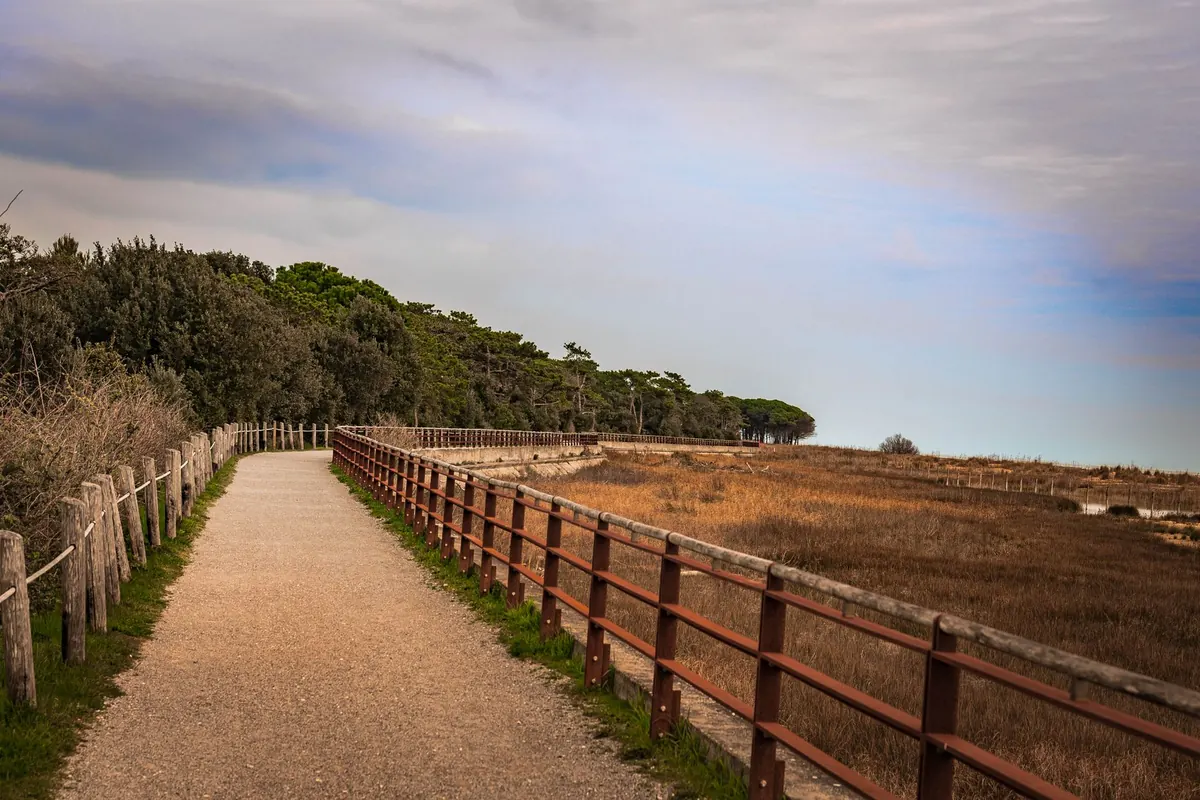
The best walks on the Suffolk coast tend to end near a hand pump. That is good planning rather than romance. Between Kessingland and the Stour there is shingle, salt marsh, heath and soft clay cliffs, and almost no hills to break up a long return leg. A pub halfway turns a trudge into a day out.
The catch is that the coast does not arrange itself around opening hours. Estuary paths flood, the Walberswick ferry stops for the season, kitchens close mid-afternoon, and a walk that looked like four miles on a phone screen turns out to be six across shingle. Here is how to pair a route with a pint without wasting either.
Pick the pub first. It has a postcode, a phone number and hours you can check in advance, which is more than can be said for a footpath on a wet Tuesday.
Then decide the shape of the day. Four to six miles is a comfortable coastal loop for most people: two to three hours at an unhurried pace, plus an hour at the pub. Add another hour if the route includes shingle, which is slow and quietly tiring, or if there is a child, a dog or a camera in the party.
Look for a loop rather than an out-and-back. Southwold harbour, the Blyth and the seasonal rowing ferry to Walberswick give you options on both banks, with more than one Adnams pub to choose from. Dunwich offers beach, heath and woodland above the village. Aldeburgh to Thorpeness is close to flat and easy to shorten. In each case the walking has to be worth it on its own; the pint is the reward, not the excuse.
Check the ferry before you build a route around it. It is a small boat, not a bridge, and it does not run all year. If it is out of service, the alternative is a long detour inland.
One more thing while you are on the phone: ask whether the kitchen is actually open, and when. A pub that serves food right through the afternoon is a different proposition from one that does 12 to 2.30 and then shuts the hatch until six. Turning up muddy and hungry at ten past three is the single most common way to spoil an otherwise perfect coastal walk.
Estuaries are what catch people out. The Blyth, the Alde, the Ore and the Deben all drain wide, flat, tidal landscapes, and the water does not arrive like a wave on a beach. It creeps across mud and through narrow channels, quietly, from several directions at once. A crossing that was ankle-deep at eleven in the morning can be waist-deep by two, and the path you came in on may be the first thing to go.
The practical rule is to walk the estuary side on a falling tide and the open-sea side on a rising one wherever the route allows. Tidal height matters more than the clock: a high spring tide over a metre above the average will overtop paths that stay dry for most of the month. If in doubt, keep to higher ground and look back often, so you can see what the water is doing behind you.
Mud is the other honest hazard. Suffolk clay and estuary silt are slippery in a way that grass never is, and the section between the car park and the pub is always the worst. Shorts, bare legs and a low sun make a nice photograph and a poor decision in February.
Footwear does most of the work. Trainers are fine for the promenade at Aldeburgh and the path to Thorpeness; they are miserable across the shingle at Dunwich and genuinely unsafe on wet clay. Take boots if the route involves estuary paths, and take a spare pair of socks regardless, because the one guaranteed shallow channel will find you.
Carry more water than the distance suggests. Sea air and shingle both dehydrate, and there is often nothing open between villages. A small rucksack with a waterproof, a hat, sun cream in summer and a midge repellent in still, warm evenings will cover almost every version of a Suffolk coastal day. Dogs are welcome in most of these pubs, but a wet dog is not, so pack a towel and know which corner you will be sitting in.
Then there is the order itself. If you have a long walk back, treat the pint as fuel rather than a finishing line: something around four per cent, drunk slowly, with a glass of water alongside it. A strong dark beer at the halfway point is a fine thing in the moment and a slow, heavy last three miles. Many of these pubs also do a decent half-pint and a bag of crisps, which is a perfectly civilised option on a hot afternoon.
The best version of this day is the one where you could happily have walked it without the pub, and had the pub anyway. Plan the route so the scenery does the work, build in time for the tide and the light, and treat the pint as part of the walk rather than a reward for surviving it.
Any walk on the Suffolk coast ends uphill, even when it doesn't. Allow for it, and the last mile is a pleasure instead of a penance.
Get those basics right and the pairing becomes simple: a route that suits the tide, a pub that suits the hour, and a beer sensible enough to carry you home.
Photo: Cătălin Todosia / Pexels